Presidential & National Assembly elections:
- 00Days
- 00Hrs
- 00Mins
- 00Sec
Counting Down to the Next Election
Get Involved.... Let your votes Count; Who leads you matters!!!.
Governorship & State Houses of Assembly elections:
- 00Days
- 00Hrs
- 00Mins
- 00Sec


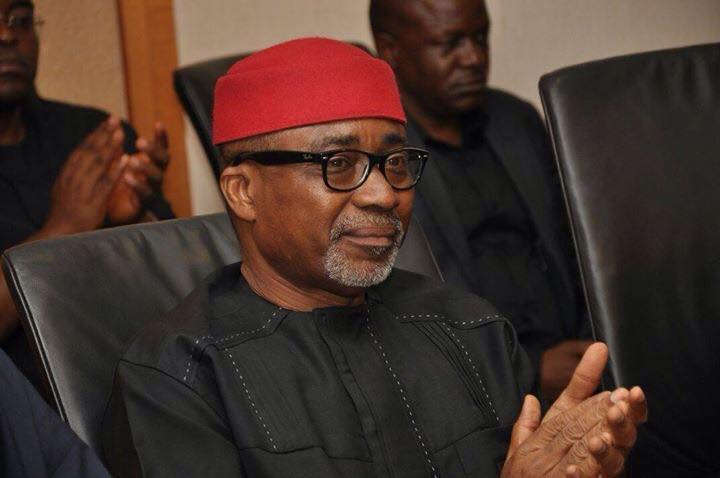
Enyinnaya Harcourt Abaribe born 1 March 1955 is a Nigerian politician who has served as the senator representing Abia South senatorial district since 2007.
He previously served as deputy governor of Abia State from 1999 until his resignation and subsequent impeachment in March 2003. He was the minority leader in the 9th senate.
In January 2020, Abaribe during a motion against worsening insecurity in Nigeria, asked President Muhammadu Buhari to resign reminding president Buhari that Nigerians voted him into power in 2015 and renewed his mandate in 2019 to tackle the security situation in the country. Abaribe said Buhari had made a promise while campaigning for the presidency in 2015 that Nigerians should stone him (Buhari) out of government should he fail to improve the security situation in the country. “Nigerians voted a government into power. We are going with stones to stone them now because they have failed”, Abaribe’s motion in the senate concluded.
Abaribe earned his WASSCE from Government College Umuahia in 1974. He went on to the University of Benin, where he received a bachelor’s degree in economics in 1979 and a master’s degree in economics in 1982. He lectured at Edo State University from 1982 until 1985.
From 1985 until 1991, he was SCOA Nigeria’s area manager for Southern Nigeria. After that, from 1991 to 1992, he was employed as Nicon’s senior manager for investment. From 1993 until 1995 he was the CEO of Integrated Mortgage Co. He is married to Florence Nwamaka Abaribe and has three children. He holds the traditional title of Nwadiohanma Ngwa.
Abaribe became Abia State’s Deputy Governor after Orji Uzor Kalu’s 1999 election to the Governorship. The state’s House of Assembly impeached the deputy governor twice in 2000 and a third time in 2003; as he was facing his third impeachment, he resigned on 7 March 2003, sending his resignation via DHL so as to have written record of it. The House of Assembly formally voted him out of office several days later, in a move Abaribe called “medicine after death”. He was succeeded as deputy governor by Eric Acho Nwakanma. Abaribe ran for the governorship on the All Nigeria Peoples Party (ANPP) platform in 2003, but lost to Kalu.
Abaribe was elected to the national Senate in 2007 on a People’s Democratic Party (PDP) ticket; Eric Acho Nwakanma of the PPA challenged the validity of the election.
Abaribe is Vice Chairman of the Senate Committee on Inter-Parliamentary Affairs (Senator Abdulaziz Usman of Jigawa-North East is chairman). He is also a member of the Committees on the Independent National Electoral Commission, Senate Services, and Works. In October 2007, as Ralph Uwazuruike, leader of the banned secessionist organization, Movement for the Actualisation of the Sovereign State of Biafra (MASSOB), was on trial for treason, Abaribe and six other southeastern senators protested at the Federal High Court in Lagos to demand his release.
Abaribe was reelected for Abia South in the April 2011 election. He is currently the chairman Senate Committee on Media and Publicity.
Abaribe was re-elected to the Nigerian 8th senate on the platform of the Peoples Democratic Party in 2015 and is currently representing the people of Abia South Senatorial District in the upper chamber. On 13 June 2019 he was appointed as the Minority leader of the Senate.
He was re-elected in the 2023 election in an election victory over other candidates with a 49,693 vote poll to win Abia South senatorial district. He was named the chairman of the Senate committee on power of the 10th senate on 8 August 2023.
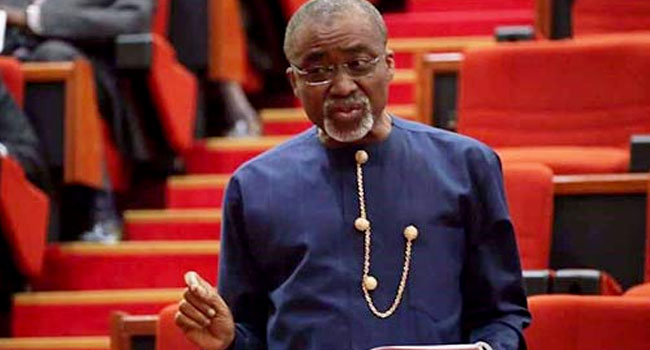
Senator Enyinnaya Abaribe’s journey has taken some dramatic turns recently, particularly in his political affiliations and his role within the 10th National Assembly. Here is the breakdown of his journey up to April 2026:
The biggest shift in Abaribe’s recent journey is his defection to the African Democratic Congress (ADC) in March 2026.
The Move: Abaribe was one of nine high-profile senators (including Aminu Tambuwal) who dumped their former parties to join the ADC.
Opposition Leadership: This mass defection was so significant that it made the ADC the primary opposition party in the Senate, overtaking the PDP.
Current Friction: His exit from APGA has not been smooth. As of April 2026, APGA has formally petitioned the Senate to declare his seat vacant, arguing his defection violates constitutional provisions since there was no “division” in APGA. Abaribe has countered this, citing his earlier suspension from the party as a grounds for his right to associate elsewhere.
Despite the party shifts, Abaribe remains a powerhouse in the Senate:
Chairman of the Committee on Power: He continues to lead this critical committee, focusing on legislative oversight for the nation’s electricity challenges.
Economic Advocacy: He remains a vocal critic of fiscal policies, recently contributing to debates on the 2026 Appropriation Bill.
Constituency Scorecard: In late 2025, he held a major town hall in Aba to present his “scorecard” after 18 years in the Senate, highlighting the installation of solar streetlights in 139 communities and the facilitation of a ₦235 million transmission line.
Abaribe appears to be positioning himself as a kingmaker and regional anchor for the next general election cycle:
Support for Alex Otti: He has publicly pledged his support for Governor Alex Otti’s 2027 re-election bid in Abia State, signaling a strong alliance between the veteran Senator and the current state executive.
National Politics: He maintains a close political relationship with Peter Obi, reaffirming his loyalty to the former presidential candidate within the broader “opposition coalition” framework now forming under the ADC and allied interests.
He continues to leverage his personal brand, established in his autobiography Made in Aba. He still champions the Made in Aba Trade Fair in Abuja, which has now become a staple event for promoting Southeast manufacturing at the federal level.
Current Status: He is essentially the “Elder Statesman” of the Senate opposition, balancing a legal battle over his seat with a strategic role in building a new national political coalition ahead of 2027.
Senator Enyinnaya Abaribe’s “manifesto” isn’t just a single campaign document; it is a long-standing legislative philosophy he calls “People-Oriented Transformation.” His agenda consistently bridges the gap between high-level policy in Abuja and grassroots economic empowerment in Abia South. Here are the core pillars of his current mandate:
This is the centerpiece of his political identity. His manifesto revolves around turning the Southeast into a manufacturing hub.
Legislative Support: Pushing for laws that mandate “Federal Patronage” of locally manufactured goods.
Market Expansion: Facilitating the annual Made in Aba Trade Fair to bring local artisans face-to-face with international investors and federal agencies.
Infrastructure for Trade: Prioritizing the completion of the Aba-Ikot Ekpene and Aba-Port Harcourt roads to ensure the seamless movement of finished goods.
As the current Chairman of the Senate Committee on Power, his technical manifesto focuses on:
Decentralization: Supporting the constitutional amendment that allows states to generate, transmit, and distribute their own electricity.
Solar Inclusion: A heavy focus on “Solarizing” rural communities. He has a track record of installing over 139 solar-powered streetlights and providing transformers to underserved areas in Obingwa and Aba.
Abaribe’s current stance links security directly to a “return to values.”
Trade Schools: He advocates for the revival of technical trade schools and certifications to provide youths with financial independence, steering them away from criminal exploitation.
Justice Reform: He continues to demand an end to the “marginalization” of the Southeast, arguing that regional peace is only possible through equitable treatment and the release of political detainees.
Abaribe has been a vocal champion for electronic transmission of results. His legislative agenda includes:
Ensuring that the INEC IReV portal is legally protected and technically sound.
Removing human interference in the collation process to ensure that “every vote from Abia South truly counts.”
Having served as Minority Leader, his personal manifesto includes a strong oversight component:
Debt Sustainability: Frequently challenging the executive on “external borrowing without clear productivity.”
Budget Transparency: Pushing for a bottom-up budgeting approach where constituency projects are selected based on direct community town hall feedback.
Summary Quote from his 2023 Campaign: > “My mission is not just to represent, but to protect the interests of the Ngwa man and the Nigerian entrepreneur. If we fix power and trade, we fix the soul of the Southeast.”
Senator Enyinnaya Abaribe’s leadership journey is defined by his transition from a beleaguered deputy governor to one of the most influential “legislative veterans” in Nigeria’s history. His milestones reflect a career built on strategic defiance and regional advocacy.
His first major leadership milestone was surviving a turbulent tenure as Deputy Governor of Abia State.
Principled Defiance: He faced three impeachment attempts by the State House of Assembly due to friction with then-Governor Orji Uzor Kalu.
The “DHL” Move: In March 2003, knowing a third impeachment vote was imminent, he famously resigned via DHL. This ensured a legal record of his voluntary exit before the Assembly could “fire” him—a move still cited in Nigerian political history as a masterclass in legal maneuvering.
After a failed gubernatorial bid in 2003, Abaribe pivoted to the Senate, where he has achieved rare longevity:
The “Voice of the East”: Since 2007, he has been a consistent representative for Abia South, making him one of the longest-serving senators in the 10th National Assembly.
Chairman of Power: In the current 10th Assembly, he chairs the Senate Committee on Power, where he oversees the transition of electricity regulation from federal to state control—a milestone for regional autonomy.
As the Senate Minority Leader during the 9th Assembly, Abaribe transitioned from a regional leader to a national figurehead for the opposition:
“Stone the Government”: In 2020, he famously moved a motion calling for the President’s resignation over rising insecurity, capturing the national mood and cementing his reputation as a “fearless” legislator.
Surety for Nnamdi Kanu: In 2017, he reached a high-stakes leadership milestone by standing as a surety for the IPOB leader, a move that carried immense political risk but solidified his loyalty to his constituents’ sentiments.
Abaribe’s most recent milestones involve shifting the political landscape of the Southeast:
Party Defection (APGA to ADC): In March 2026, he led a high-profile defection to the African Democratic Congress (ADC). This move was instrumental in making the ADC the primary opposition party in the Senate.
Coalition Building: He has become a bridge-builder between old-guard politicians and the “Third Force” movements, positioning himself as a senior strategist for the 2027 election cycle.
His leadership is also measured by his “Scorecard” in Abia South:
Rural Electrification: He has facilitated the installation of solar streetlights in 139 communities across Obingwa, Aba North, and Aba South.
Educational Infrastructure: Milestone projects include the renovation of the Ohuru Primary School and the construction of a mini-sports stadium at Ahiaba High School.
| Period | Key Role | Defining Leadership Impact |
| 1999–2003 | Deputy Governor | Established his reputation for executive independence. |
| 2007–2011 | Senator | Emerged as a primary advocate for “Made in Aba” products. |
| 2019–2022 | Minority Leader | Led the legislative opposition against federal security policies. |
| 2023–2026 | Committee Chair | Spearheaded legislative oversight for national power sector reforms. |
Senator Abaribe’s community projects are largely funneled through the Zonal Intervention Programs (ZIP) and are heavily focused on rural electrification, trade facilitation, and educational infrastructure.
Here is a detailed breakdown of his project portfolio as of April 2026:
Reflecting his role as the Senate Committee Chairman on Power, Abaribe has prioritized “lighting up” Abia South to improve security and nighttime trade.
Mass Solar Streetlight Installation: A flagship project involving the installation of all-in-one solar streetlights across indigent communities in Aba North, Aba South, Obingwa, Ugwunagbo, Ukwa East, and Ukwa West.
School Electrification: Strategic installation of renewable solar lighting specifically for senatorial schools to facilitate evening studies and digital connectivity.
Grid Support: He has facilitated the provision of high-capacity transformers to several communities in Aba South that had been in darkness for years due to grid failures.
Abaribe views his “community projects” as a means to stimulate the local economy, particularly in the Aba business cluster.
Made in Aba Trade Fair (Abuja): This is his most visible annual project. He facilitates a week-long exhibition in the Federal Capital Territory where Aba-based artisans (shoemakers, garment workers, etc.) are sponsored to showcase and sell their products to federal agencies and international buyers.
SME Training Centers: He has funded the establishment of vocational training hubs focused on standardizing the quality of locally made leather and garment products to meet international export requirements.
Classroom Construction: Abaribe has overseen the renovation and construction of new classroom blocks in several primary and secondary schools across his district, such as the Ohuru Primary School.
Mini-Sports Stadiums: He has focused on youth engagement by constructing mini-stadiums and sports facilities, notably at Ahiaba High School, aimed at providing safe spaces for talent development in his constituency.
Primary Healthcare Support: He has facilitated the supply of medical equipment and the renovation of rural health centers in the Ukwa region to reduce the distance residents must travel for basic care.
Solar-Powered Boreholes: In water-scarce areas of Abia South, he has commissioned several solar-powered borehole projects to provide clean, consistent drinking water to rural communities.
This aligns closely with the “Value-Based Leadership” themes you’ve been exploring:
Constituency Town Halls: He holds regular town hall meetings where he presents a physical “Scorecard” to his constituents, allowing them to vote on which projects should be prioritized in the next budget cycle (a rare practice of participatory budgeting).
Empowerment Grants: Targeted grants for widows and small-scale traders in the Aba markets to help offset the impact of inflation.
Public opinion on Senator Enyinnaya Abaribe is a study in contrasts. He is often viewed as a “folk hero” by some and a “political nomad” by others, with his 2026 defection to the African Democratic Congress (ADC) serving as the current flashpoint for debate.
Many constituents and observers view him as the most consistent defender of Southeast interests in Abuja.
Fearless Advocacy: He is widely praised for his willingness to challenge the executive branch. His 2020 call for the President’s resignation over insecurity remains a defining moment for those who feel the National Assembly is often too subservient.
Regional Loyalty: His decision to stand as surety for Nnamdi Kanu in 2017 earned him deep-rooted loyalty among many in the Southeast, who see him as one of the few politicians willing to put his own freedom on the line for regional justice.
“Made in Aba” Patron: Local artisans in Abia South generally hold a high opinion of him due to his relentless promotion of their trade, which has given Aba-made goods national visibility they previously lacked.
As of early 2026, a new wave of criticism has emerged following his move to the ADC.
Party Loyalty Concerns: Critics argue that his frequent party changes (PDP to APGA to ADC) suggest he is more focused on political survival than institutional stability. APGA leadership has explicitly labeled his move a “betrayal of the mandate.”
The “Legislative Careerist” Tag: Some younger constituents have expressed a desire for “new blood,” arguing that after nearly 20 years in the Senate, his leadership has become a fixture rather than a catalyst for fresh change.
Constitutional Controversy: His recent defection has led to public debate over the “legality” of his seat. While he claims he was expelled from APGA, the lack of immediate public evidence has led some to view the move as a strategic maneuver to lead the Senate opposition rather than a move based on principle.
Within the Senate, opinions are split along partisan lines:
The Opposition Anchor: Colleagues in the ADC and other minority parties see him as a strategic “anchor” who brings veteran experience to the newly reorganized opposition bloc.
The “Confrontational” Label: Some members of the ruling party (APC) view his leadership style as overly confrontational, fearing that his role as a key opposition figure will make legislative consensus more difficult.
| Segment | Primary View | Sentiment |
| Abia South Artisans | Pro-Abaribe (Economic support) | High |
| APGA Party Loyalists | Disappointed (Betrayal of mandate) | Low |
| Southeast Youth | Mixed (Admire his courage / Want fresh blood) | Neutral |
| Federal Opposition | Respect (Strategic veteran leadership) | High |
The General Consensus: Most Nigerians see Abaribe as a “heavyweight” who cannot be ignored. Whether people like his politics or not, he is widely respected for his intellectual depth and oratorical skill on the Senate floor.