Presidential & National Assembly elections:
- 00Days
- 00Hrs
- 00Mins
- 00Sec
Counting Down to the Next Election
Get Involved.... Let your votes Count; Who leads you matters!!!.
Governorship & State Houses of Assembly elections:
- 00Days
- 00Hrs
- 00Mins
- 00Sec


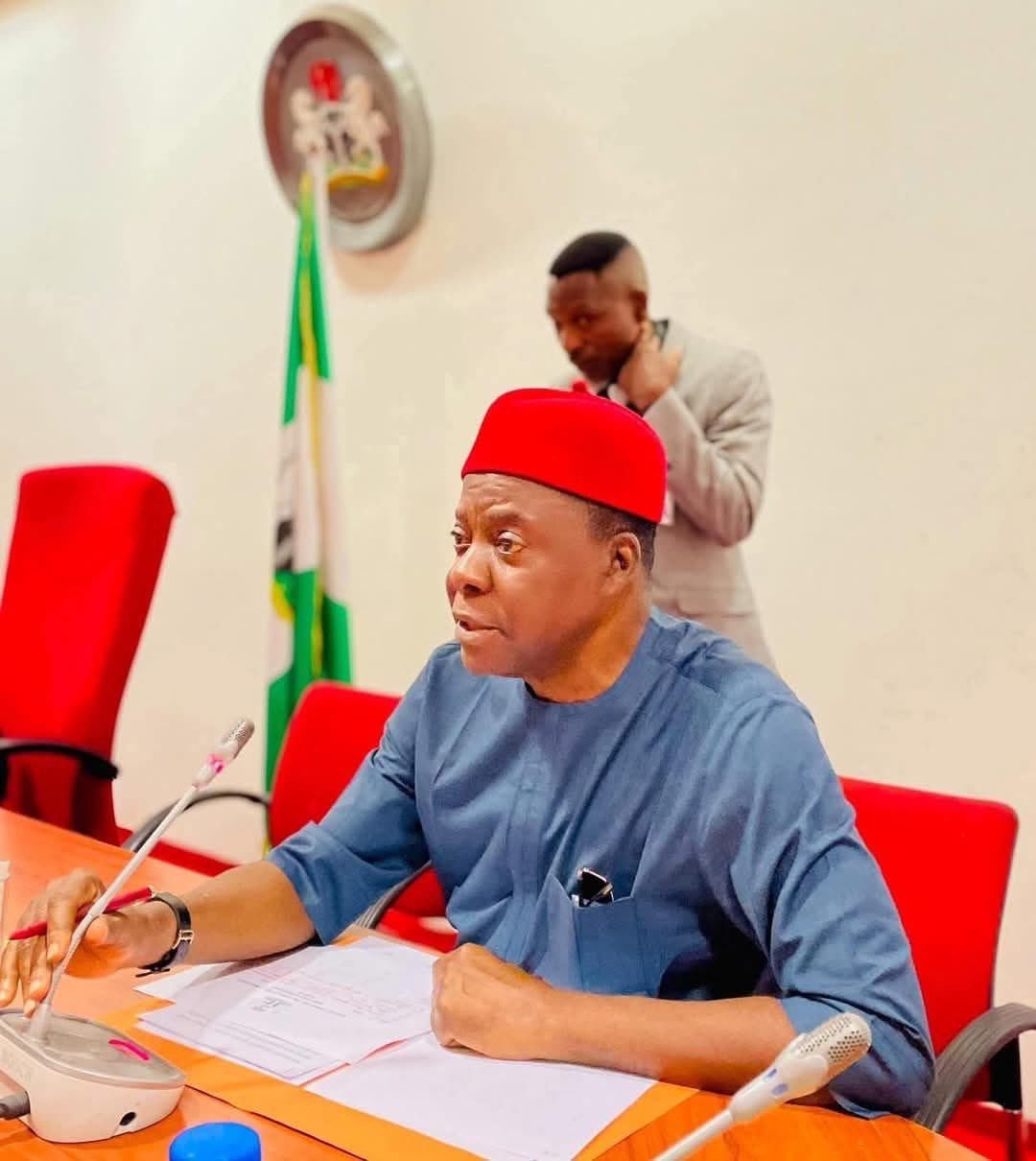
Senator Okechukwu “Okey” Ezea, popularly known as Ideke, was a prominent Nigerian politician, lawyer, and entrepreneur who represented the Enugu North Senatorial District in the 10th National Assembly.
Tragically, Senator Ezea passed away on November 18, 2025, at the age of 62, following a brief illness. He was buried in February 2026 in his hometown of Itchi, Enugu State, amidst nationwide tributes to his principled leadership.
Birth: Born on August 11, 1963, in Itchi, Igbo-Eze South LGA, Enugu State.
Education: He was highly academic, holding a B.Sc. in Political Science from the University of Nigeria, Nsukka (UNN) and both LL.B and LL.M degrees from the University of Lagos. At the time of his passing, he was a doctoral student at the Nigerian Institute of Advanced Legal Studies.
Family: He was married to Chioma Ezea and was a devoted father of four children.
Professional Identity: Before politics, he served in the Nigeria Customs Service, retiring as a Deputy Superintendent in 1994. He later became a successful logistics mogul, founding Ideke Shipping Limited and several other engineering and security firms.
Ezea’s journey was defined by resilience and an “uncompromising” stance on justice, often switching platforms to align with his principles rather than political convenience.
The Entrepreneurial Phase: After the Customs Service, he became a major player in the oil and gas logistics sector through his Ideke group of companies.
The “Ideke” Political Movement: He first ran for Governor of Enugu State in 2007 under the Labour Party and again in 2015 as a co-founder of the APC in Enugu.
The 2023 “Obidient” Surge: In 2023, he returned to the Labour Party, winning a historic victory for the Enugu North Senatorial seat by defeating the incumbent PDP stronghold.
Senator Okey Ezea’s journey was a remarkable 62-year story of resilience, spanning from the ranks of the civil service to the heights of national legislation. Known affectionately as Ideke, his path was defined by an refusal to compromise on his principles, even when it meant taking the harder political road.
After graduating from the University of Nigeria, Nsukka, and completing his National Youth Service, Ezea joined the Nigeria Customs Service. He served for seven years, rising to the rank of Deputy Superintendent of Customs before choosing to retire voluntarily in 1994 to pursue his own ventures.
Upon leaving the civil service, he transitioned into the private sector, where he became a highly successful logistics and engineering mogul.
He founded Ideke Shipping Limited, which became a major player in the logistics subsector of Nigeria’s oil and gas industry.
He expanded his business empire to include engineering, security, and intermodal services, providing significant employment in the Nsukka zone and beyond.
Ezea’s political journey was one of long-term persistence. He was often described as the “perennial candidate” who refused to give up on his vision for Enugu State.
Labour Party Beginnings: He first ran for Governor of Enugu State in 2007 under the Labour Party. While he was declared the loser, he successfully challenged the result in court, leading to a tribunal-ordered rerun.
The APC Era: In 2013, he became a founding member of the All Progressives Congress (APC) in Enugu State and was their gubernatorial candidate in 2015.
Federal Service: In 2018, he was appointed by President Buhari as the Chairman of the Governing Board of the Federal Medical Centre, Jalingo, a role he held until 2022.
The most defining milestone of his journey occurred in 2023 when he returned to the Labour Party.
The Giant Slayer: In a historic upset, he defeated the sitting Governor of Enugu State, Ifeanyi Ugwuanyi, to win the Enugu North Senatorial seat. This victory was seen as a tectonic shift in Enugu politics.
Senate Leadership: In the 10th Senate, he quickly became a respected voice, chairing the Committee on Ethics, Privileges and Public Petitions. He was known for his “quiet wisdom” and was a spiritual and moral anchor for many of his younger colleagues.
Senator Ezea’s journey came to an end on November 18, 2025, in Lagos. He passed away at the age of 62 following a brief illness. At the time of his death, he was still an active doctoral student, illustrating his lifelong commitment to learning.
The Legacy of Loyalty: > One of the most celebrated aspects of his journey was his refusal to defect from the Labour Party after his 2023 victory. Despite immense pressure to join the ruling party, he remained the only federal lawmaker from Enugu State to stand firm with the party that sponsored him, cementing his reputation as a man of unshakable character.
Senator Okey Ezea’s 2023 manifesto, which he campaigned on as the “people’s choice,” was centered on the theme of “Quality and Honest Representation.” He positioned himself as a corrective force against years of what he described as “mediocrity and voter disconnect” in the Enugu North Senatorial District.
His legislative agenda was built on four main pillars:
This was the cornerstone of his manifesto. Ezea pledged to be the “voice of the Nsukka cultural zone,” prioritizing the long-standing quest for the creation of Adada State. He argued that the zone deserved its own state to ensure equitable federal attention and infrastructure development.
Ezea promised that “everything meant for Enugu North must get to the district.” His manifesto focused on:
Road Reconstruction: Specifically lobbying for the completion of the Makurdi–Obollo–Opi–Ninth Mile expressway, which he inherited as a dilapidated project.
Health Expansion: Working to establish an annex of the National Orthopedic Hospital, Enugu at Aku in Igbo-Etiti LGA to bring specialized healthcare closer to his constituents.
Basic Amenities: A commitment to rural electrification and water, including the installation of solar-powered boreholes and street lights across the senatorial district, specifically mentioning the University of Nigeria, Nsukka (UNN).
As an entrepreneur, he envisioned turning the Nsukka zone into a modernized agricultural hub:
Federal College of Agriculture, Adani: He championed the upgrade of local agricultural facilities to federal status to boost rice production and create jobs for youths.
Agribusiness Integration: His agenda included using his maritime and logistics experience to help local farmers connect their produce to larger national and international markets.
Reflecting his eventual role as Chairman of the Senate Committee on Ethics, Privileges and Public Petitions, his manifesto emphasized:
Anti-Corruption: He pledged never to “pinch” or divert funds meant for constituency projects.
Inclusive Governance: He promised a “new culture” of transparency, where he would maintain an open-door policy and regularly report back to the “Onyishi” (elders) and the general public.
Human Capital: His platform moved away from temporary “stomach infrastructure” (handouts) toward sustainable human value formation, such as education reform and vocational training.
The “Ideke” Promise: > Throughout his journey, Ezea’s manifesto was characterized by the phrase: “I won’t dash your hopes.” He often stated that his primary goal was to ensure the Nsukka person felt a “sense of ownership” in the Nigerian government, a promise he was actively fulfilling through his legislative motions until his passing in late 2025.
Senator Okey Ezea’s leadership milestones in the 10th National Assembly were marked by a focus on ethics, regional equity, and the protection of his constituents. Despite his passing in late 2025, his tenure left several significant markers:
Chairman, Senate Committee on Ethics, Privileges and Public Petitions: In this high-stakes role, he served as the “moral compass” of the Senate. He was responsible for investigating public petitions and maintaining the code of conduct for lawmakers.
Integrity in Plenary: He was widely respected by colleagues across party lines for his “quiet wisdom.” Senator Natasha Akpoti-Uduaghan famously credited him for providing her with critical guidance during her most difficult moments in the Senate.
Constitutional Alteration Bill (2024): On July 2, 2024, Ezea successfully sponsored the first reading of a bill to create Adada State out of the current Enugu State.
Regional Parity: His goal was to bring the South-East to a six-state structure, putting it at par with other geopolitical zones. This move was seen as the most serious legislative attempt in decades to fulfill this long-standing aspiration of the Nsukka people.
Federal College of Agriculture, Adani: He sponsored the Agricultural Research Council Act (Amendment) Bill to establish this institution in Uzo-Uwani LGA. His vision was to transform the area into a modernized agricultural hub for rice and commercial farming.
Grassroots Representation: In May 2024, he took the unprecedented step of naming 45 legislative assistants from across the Enugu North district to ensure that every community had a direct line to the Senate.
Military Base in Uzo-Uwani: Following recurring attacks by armed herders in Nimbo and surrounding communities, Ezea moved a high-profile motion in the Senate calling for the immediate establishment of a military base in the area.
Direct Intervention: He was known for personally visiting troubled communities immediately after attacks, using his position to demand “effective policing” and national attention for rural security.
Road & Hospital Projects: Leveraging his background in logistics, he successfully lobbied for the commencement of work on the Makurdi–Obollo-Afor–Opi–Ninth Mile expressway.
Specialized Healthcare: He facilitated the inclusion of a new Orthopedic Hospital project in Aku (Igbo-Etiti LGA) in the federal budget, aimed at decentralizing specialized care in Enugu State.
A Legacy of Principle: > Perhaps his greatest leadership milestone was his political consistency. Despite the trend of lawmakers defecting to the ruling party, Ezea remained a steadfast member of the Labour Party until his death, famously stating that he would rather “stand alone with the people” than trade his mandate for political convenience.
Senator Okey Ezea’s community projects were driven by a philosophy of “Grassroots Presence.” He believed that for a senator to be effective, every community within the district—from the urban centers of Nsukka to the remote villages of Uzo-Uwani—needed to have a direct physical and digital link to his office.
His most notable initiatives included:
In May 2024, Senator Ezea reached a significant milestone by appointing 45 Legislative Assistants specifically drawn from the various wards and local government areas of Enugu North.
The Purpose: This was more than a political gesture; it was a structural project designed to ensure that community needs (such as broken transformers, dilapidated schools, or local security threats) were reported directly to his office in real-time.
Impact: This network allowed him to respond to local crises, such as the tragic road accidents at Ugwu Onyeama, with rapid legislative motions and direct advocacy with the Federal Ministry of Works.
Following several attacks on farming communities in Uzo-Uwani LGA, Ezea focused on projects that combined security advocacy with immediate material support:
Community Interventions: He made frequent personal visits to affected communities like Nimbo, providing financial relief and food supplies to displaced families.
Security Infrastructure: He lobbied for the establishment of a permanent military presence and improved police patrolling in rural agrarian zones to protect farmers’ livelihoods.
Ezea’s background in engineering and logistics influenced his focus on physical infrastructure:
Solar Electrification: He initiated a series of solar-powered street lighting projects in various Nsukka communities to improve nighttime security and support local commerce.
Water Access: He prioritized the rehabilitation of boreholes and the installation of new solar-powered water schemes in underserved rural areas to reduce the burden of water collection on women and children.
As a devoted scholar himself, Ezea invested heavily in the intellectual capital of his district:
Digital Tools for Schools: He facilitated the distribution of laptops and educational materials to several secondary schools in Enugu North to promote ICT literacy.
Professional Mentorship: He frequently hosted “Constituency Outreach” sessions where he engaged with young professionals and law students (particularly from his alma mater, UNN), providing mentorship and resources for career advancement.
Scholarships: He maintained a private scholarship fund for indigent students from the Nsukka cultural zone, ensuring that financial constraints did not prevent high-achieving youths from completing their tertiary education.
FMC Jalingo Legacy: Drawing from his experience as the former Chairman of the Federal Medical Centre, Jalingo, he actively worked to bring similar federal healthcare standards to Enugu North, specifically through the proposed annex of the National Orthopedic Hospital at Aku.
Social Safety Nets: During festive periods and the high-inflation months of 2024, he carried out large-scale food distributions (rice, beans, and oil) to widows and elderly citizens across the six local government areas of the zone.
The “Ideke” Legacy: His projects were often described by constituents as “honest interventions.” Rather than launching massive, flashy projects that were never completed, Ezea favored smaller, high-impact community fixes that addressed the daily struggles of the Nsukka people.
Public opinion on Senator Okey Ezea’s leadership was profoundly positive, characterized by a deep sense of loss following his death in late 2025. He is remembered not just as a politician, but as a “shining light” and a “lion” who fought for the Nsukka people with unmatched consistency.
The prevailing views of his leadership include:
Constituents and community leaders widely regarded him as the primary advocate for the political and social justice of the Enugu North zone.
Fidelity of Conscience: At a Night of Tributes in February 2026, he was described by Chief Nnia Nwodo as a leader defined by “tenacity of purpose.” He was praised for never imposing himself on the people and for connecting deeply with the “downtrodden.”
Fighting for “Adada”: His relentless pursuit of the Adada State creation is cited as one of his greatest legacies. Even political rivals admitted that his commitment to this regional cause was “unwavering.”
In a political landscape where defection is common, Ezea’s loyalty to his platform was his trademark.
The “Best Among Us”: Peter Obi, a close ally, stated that if even 5% of Nigerian politicians lived with Ezea’s level of consistency, the country would be transformed. He was described as a man who “knew when to talk and when to keep quiet.”
Unyielding Loyalty: Members of the Labour Party lauded him for remaining steadfast to his party and his people, even while facing grave health challenges in his final days.
Within the Senate, he was viewed as a high-caliber professional.
Magnificent Contributions: Senate President Godswill Akpabio noted that Ezea’s contributions on the floor were “magnificent” and that he was always “impeccably dressed,” projecting an image of technical and professional dignity.
A Mentor Figure: Younger lawmakers often saw him as a “gentleman” and a “hero” who provided a calm, intellectual counterbalance to the often-turbulent nature of national politics.
For many in Enugu North, Ezea’s leadership marked the first time in decades they felt “effectively represented” at the federal level.
Infrastructure Deliverables: He was credited with “pestering” the Federal Ministry of Works until construction gathered steam on the Makurdi–Obollo–Opi–Ninth Mile expressway.
Direct Impact: From solar-powered boreholes to the proposed Orthopedic Hospital annex in Aku, public opinion suggests he was successful in translating his “maritime entrepreneur” mindset into efficient legislative results.
The “Lion of Nsukka” Verdict: > The consensus at his burial in early 2026 was that Senator Ezea “lived and died for his people.” His death is viewed by many as the “end of an era” for Enugu North, leaving behind a vacuum of principled, grassroots-connected leadership that many believe will be exceptionally difficult to fill.