Presidential & National Assembly elections:
- 00Days
- 00Hrs
- 00Mins
- 00Sec
Counting Down to the Next Election
Get Involved.... Let your votes Count; Who leads you matters!!!.
Governorship & State Houses of Assembly elections:
- 00Days
- 00Hrs
- 00Mins
- 00Sec


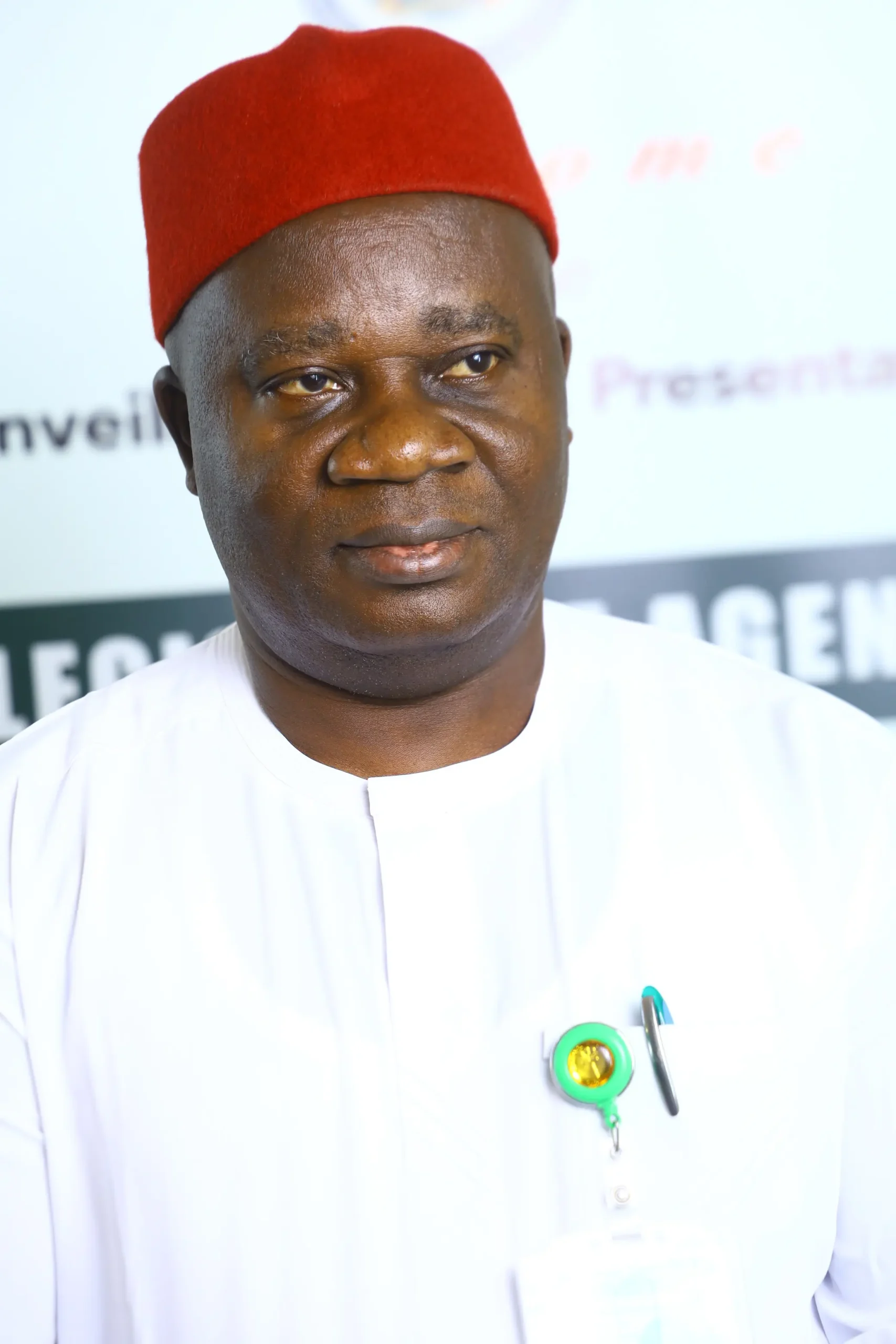
Senator Victor Chukwunonyelu Umeh, OFR, is a prominent Nigerian politician and estate surveyor known for his resilience and mastery of electoral law. Currently representing Anambra Central Senatorial District in the 10th National Assembly, he has spent much of 2026 at the center of a major political realignment in the Southeast.
Born on July 19, 1962, in Aguluzigbo, Anambra State, Umeh was raised in a strict Christian household.
Secondary Education: Bubendorff Memorial Grammar School, Adazi-Nnukwu, where he graduated top of his class in 1980.
University Education: He earned a B.Sc. in Estate Management from the University of Nigeria, Nsukka (UNN) in 1984.
Professional Background: He is a Fellow of the Nigerian Institution of Estate Surveyors and Valuers and the Principal Consultant at V.C. Umeh & Co.
Umeh built a professional career in real estate valuation and property management. He founded the firm V. C. Umeh & Co., becoming a certified estate surveyor and valuer.
His professional affiliations include:
He also served as Director of the Nigerian Film Corporation (2001–2003). Beyond professional practice, Umeh has remained active in public policy and civic engagement, including serving as a delegate at Nigeria’s 2014 National Conference.
Through the Victor Umeh Education Foundation (VUMEF), he has sponsored hundreds of indigent students through secondary, university, and postgraduate education.
Umeh has balanced his private practice with several federal and state-level appointments:
Director, Nigerian Film Corporation (2001–2003): He served on the board of this federal agency based in Jos.
2014 National Conference Delegate: He was appointed by the President as one of the 492 eminent Nigerians to participate in the National Conference, where he famously championed matters concerning equity and regional balance for the Southeast.
Director of Companies: He sits on the boards of several private companies in the infrastructure and service sectors.
Umeh’s political “work” is defined by his role as a master strategist and party builder.
PDP State Treasurer (1999–2001): He began his political journey as a founding member and the first Treasurer of the PDP in Anambra State.
APGA National Chairman (2004–2015): This is his most iconic role. For over a decade, he managed the All Progressives Grand Alliance, leading the legal “rescue” of Peter Obi’s mandate in 2006 and securing multiple gubernatorial victories.
The “Senator of Courtrooms”: His legislative work history is unique because much of it was fought for in court.
8th Senate (2018–2019): Served for 18 months after a 3-year legal battle to reclaim his seat.
10th Senate (2023–Present): Elected on the Labour Party platform, he currently chairs the Senate Committee on Diaspora and NGOs.
A significant part of his life’s work is the Victor Umeh Education Foundation (VUMEF).
Impact: For over 17 years, he has personally funded the education of over 220 students, many of whom have reached Ph.D. and Master’s levels. He views this as his “secondary task” that is as essential as his primary role in the Senate.
| Period | Organization/Role | Sector |
| 1985–Present | V.C. Umeh & Co. (Principal Consultant) | Real Estate / Valuation |
| 1999–2001 | PDP (State Treasurer) | Party Administration |
| 2001–2003 | Nigerian Film Corporation (Director) | Public Service |
| 2004–2015 | APGA (National Chairman) | Political Strategy |
| 2018–2019 | 8th National Assembly (Senator) | Legislation |
| 2023–Present | 10th National Assembly (Senator) | Legislation (Diaspora Chair) |
Senator Victor Umeh’s journey in the 10th Senate has been a masterclass in political maneuvering, moving from a key “Obidient” victory in 2023 to leading a massive national opposition realignment in early 2026.
Here is the breakdown of his journey up to April 2026:
After a high-profile fallout with the All Progressives Grand Alliance (APGA), Umeh’s journey took a dramatic turn when he joined the Labour Party (LP) just days before the 2023 polls.
The Judicial Rescue: His candidacy was initially disqualified by a lower court, but in a signature Umeh move, he secured a Court of Appeal victory just three days before the election.
The Mandate: He won the Anambra Central seat with over 103,000 votes, unseating the long-term incumbent and cementing his place as a central figure in the “Third Force” movement.
Umeh began his 10th Senate journey as the Chairman of the Senate Committee on Diaspora and NGOs.
Global Engagement: He focused on creating a framework for Diaspora voting and protecting the investments of Nigerians living abroad.
The “NiDCOM” Collaboration: He worked closely with the Nigerians in Diaspora Commission (NiDCOM), being recognized as a 2025 Awardee for his legislative support of the diaspora community.
Redeployment: In February 2025, during a Senate committee reshuffle, he transitioned out of the Diaspora chair, a move that sparked debate among diaspora activists about the continuity of his reforms.
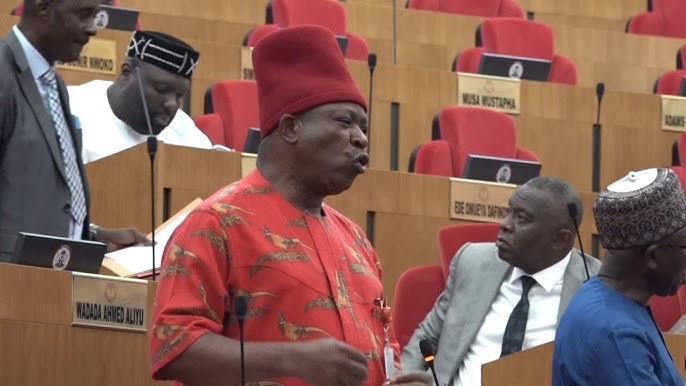
In March 2026, Umeh made his most significant journey yet—leaving the Labour Party to join the African Democratic Congress (ADC).
Leading the Wave: He was part of the historic “Nine-Senator Defection” that included heavyweights like Sen. Abaribe and Sen. Tambuwal.
The “Third Force” Architect: By joining the ADC, Umeh helped transform the party into the primary opposition bloc in the Senate. He currently serves as the Chairman of the Programmes and Events Sub-committee for the ADC, effectively building the platform intended to challenge the status quo in the 2027 elections.
4. The Electoral Reform Crusade (Early 2026)
Umeh has spent much of the current year (2026) focused on Electoral Act Amendments.
Electronic Transmission: He has been a vocal leader in the push for the mandatory electronic transmission of results. He famously clarified the Senate’s consensus, noting that while there were debates over “real-time” transmission due to technical constraints, the principle of an electronic tally is “non-negotiable” for his bloc.
The “K-Leg” Warning: He has been active in the media, warning that the “IReV” process still has loopholes (which he calls “K-legs”) that must be fixed before the next election cycle to prevent rigging.
| Phase | Role / Event | Key Impact |
| May 2023 | Inauguration (Labour Party) | Brought the “Obidient” voice to the Senate. |
| Aug 2023 – Feb 2025 | Chair, Diaspora Committee | Pushed for Diaspora voting and investment protection. |
Senator Victor Umeh’s manifesto for the 10th Senate is anchored in the concept of “Equitable Federalism”—a drive to fix the structural imbalances he believes have historically held back the Southeast and the Nigerian diaspora.
Since his strategic move to the ADC in early 2026, his manifesto has evolved to focus on these four non-negotiable pillars:
Umeh’s most prominent manifesto promise is achieving “justice for the Southeast” through constitutional amendment.
State Creation: He is a lead advocate for the creation of an additional state in the Southeast (recently supporting the Anioma State proposal) to bring the region’s tally to six, matching other geopolitical zones.
Fair Representation: He argues that the current five-state structure is a “mathematical injustice” that robs the region of federal revenue, ministerial slots, and legislative influence.
Healing and Unity: He frames this not as a regional demand, but as a “bold step toward national healing.”
As the former Chairman of the Senate Committee on Diaspora and NGOs, Umeh’s manifesto includes a formal framework for Nigerians abroad.
Diaspora Voting: A commitment to amending the Electoral Act to allow Nigerians in the diaspora to vote in presidential elections, arguing that those who contribute billions in remittances deserve a say in governance.
Investment Protection: Establishing legal safeguards for diaspora-led community projects and businesses in Nigeria to prevent fraud and bureaucratic bottlenecks.
Following his defection to the ADC, Umeh has updated his manifesto to prioritize Electoral Reform ahead of 2027.
Electronic Transmission: He is a vocal proponent for the mandatory electronic transmission of results from polling units. He has publicly criticized the “K-legs” (loopholes) in the current IReV system and has promised to use his 2026 committee roles to close them.
Independent Oversight: Advocating for a more technologically insulated INEC to reduce human interference during collation.
His personal manifesto includes a pledge to use his office to expand human capital through the Victor Umeh Education Foundation (VUMEF).
Indigent Scholarships: A promise to sustain and scale his program that sponsors “brilliant but indigent” students. As of 2026, he has reached a milestone of supporting over 220 students across professional fields like Law, Engineering, and Medicine.
Vocational Specialization: Pushing for the establishment of technical colleges in Anambra Central that specialize in estate management and urban planning, mirroring his own professional background.
| Pillar | Objective | Desired Outcome |
| Structural | Create an additional SE State. | Regional parity in the Federation. |
| Diaspora | Secure Diaspora Voting Rights. | Inclusion of the “37th State” (Nigerians abroad). |
| Democratic | Mandatory E-Transmission. | Transparent and credible 2027 elections. |
| Social | VUMEF Scholarship Expansion. | 500+ Ph.D./Professional graduates by 2027. |
Manifesto Motto: “Restoring Justice through the Rule of Law.”
Senator Victor Umeh’s leadership milestones are defined by his status as a “Master of the Mandate.” His career is a series of high-stakes legal and political victories that have earned him a reputation as the most resilient party administrator and electoral strategist in the Southeast.
Umeh’s most enduring milestone is his role as the foundational “engine room” of the All Progressives Grand Alliance.
The Mandate Recoverer: He famously led the three-year legal battle that recovered Peter Obi’s 2003 governorship mandate in 2006. This was the first time in Nigerian history that an incumbent governor was removed by the courts in favor of the rightful winner.
Regional Party Expansion: Under his decade-long leadership as National Chairman, APGA moved from a “fringe” party to a regional power, winning governorships in Anambra (repeatedly) and Imo (2011).
The Ojukwu Legacy: He was the trusted political associate of Dim Chukwuemeka Odumegwu-Ojukwu, successfully protecting the party’s “Igbo interest” identity through numerous internal crises and leadership tussles.
Umeh was appointed as a delegate to the 2014 National Conference by the President, where he achieved a significant national milestone.
The Voice for Parity: He was one of the most vocal advocates for the creation of an additional state in the Southeast to achieve parity with other zones—a cause he continues to champion in the Senate today.
Presidential Recognition: At the conclusion of the conference, he was decorated with a Medal of Recognition for his quality contributions to the constitutional debate.
In a milestone of personal resilience, Umeh’s first entry into the Senate was a “legal marathon.”
Three-Year Battle: After the 2015 elections were nullified, he fought a protracted 3-year litigation to ensure the by-election was held.
Landslide Victory: He eventually won the by-election with 64,879 votes, while none of his 13 opponents polled more than 1,000 votes—a testament to his overwhelming grassroots support in Anambra Central.
His 2023 journey to the Senate is considered a major milestone in strategic adaptability.
Strategic Shift: After being denied a ticket in APGA, he moved to the Labour Party, successfully aligning his “Ohamadike” brand with the youth-led “Obidient” movement.
The “Three-Day” Victory: In typical Umeh fashion, he was disqualified by a lower court just weeks before the election, only to secure a Court of Appeal victory three days before the polls. He went on to win with over 103,000 votes.
As of early 2026, Umeh has reached a new milestone as a national “Third Force” architect.
ADC Defection: By leading a wave of senators into the African Democratic Congress (ADC) in March 2026, he fundamentally altered the Senate’s power dynamics.
Chairman of Events: He is currently overseeing the ADC’s national organizational strategy, positioning the party as the primary alternative to the APC and PDP for the 2027 cycle.
| Era | Key Achievement | Role |
| 2006 | Recovered Peter Obi’s Mandate | APGA Strategy Lead |
| 2014 | National Conference Recognition | Delegate / Equity Advocate |
| 2018 | Won 3-Year Legal Battle for Senate | Senator (8th Assembly) |
| 2023 | 100k+ Vote “Obidient” Victory | Senator (10th Assembly) |
| 2026 | Formed ADC Opposition Bloc | ADC National Strategist |
Senator Victor Umeh’s community projects are defined by a “long-game” approach to human capital. While many politicians focus on temporary relief, Umeh has famously stated that education is his core constituency project.
As of April 2026, his project portfolio is led by the massive expansion of his scholarship foundation, alongside targeted infrastructure in Anambra Central.
In January 2026, Umeh hosted a landmark event at Canaan House in Awka that has become the benchmark for his community service.
The ₦64 Million Grant: He awarded ₦64 million in scholarships to 326 indigent students for the 2025/2026 academic session.
VUMEF Legacy: This project, managed through the Victor Umeh Education Foundation (VUMEF), has now produced over 2,320 graduates since its inception. The 2026 cohort includes:
Special Needs Support: Provision of cash and high-tech tools, including an HP Braille laptop, for a blind Sociology student at Nnamdi Azikiwe University.
Diverse Reach: While focused on Anambra Central, the 2026 beneficiaries include students from Enugu, Imo, and Ebonyi, reflecting a “regional father” approach.
Non-Discriminatory: Selection is made transparently through Presidents General of town unions and traditional rulers from all 58 communities in his district.
Umeh uses his position on the Senate Committee on Housing to facilitate physical development in Anambra Central.
Renewed Hope Estates: He is a lead advocate for the allocation of ₦500 billion annually for the Renewed Hope Cities & Estates program. He has been working to ensure that Anambra is a priority recipient of these 250-unit housing estates to bridge the local housing deficit.
Water & Primary Schools: Building on his record from the 8th Assembly, he has continued to facilitate solar-powered boreholes and the renovation of primary school blocks across the seven LGAs of his district.
Healthcare Support: In late 2025, he publicly pledged that the Anambra Central senatorial office would “continually identify with and support” community-led health projects, such as the developmental strides seen in the Umuawulu community.
As the former Chair of the Diaspora Committee, Umeh has been bridging the gap between Nigerians abroad and their home communities.
NGO Collaboration: He has been facilitating partnerships between international NGOs and local community leaders to fund rural medical outreaches and agricultural support programs in the Southeast.
Beyond formal schooling, Umeh funds vocational training sessions focused on:
Professional Technical Skills: Leveraging his background in Estate Management to sponsor workshops in land survey, building valuation, and urban planning for young graduates.
Start-up Capital: Recipients of these workshops are often provided with “seed grants” to establish small-scale professional firms.
| Project Type | Key Achievement | Beneficiaries |
| Education | ₦64m Scholarship Disbursement (Jan 2026) | 326 Indigent Students |
| Housing | Advocacy for 250-unit Renewed Hope Estates | Anambra Central Residents |
| Technology | HP Braille Laptops & Assistive Tech | Students with Disabilities |
| Healthcare | Support for PHC Renovations | Rural Communities (e.g., Umuawulu) |
| Employment | Job Facilitation via Senate Committees | Youth Graduates |
Public opinion on Senator Victor Umeh in 2026 reflects his transition from a regional “party general” to a national “constitutional watchdog.” While his legislative technicality is widely respected, his recent political shifts have triggered a mix of admiration for his strategy and skepticism about his party loyalty.
Among political analysts and legal enthusiasts, Umeh is viewed as one of the most intellectually grounded members of the 10th Senate.
The “IReV” Defender: His recent media appearances in early 2026, where he criticized the Senate for not acting in the national interest regarding the Electoral Act, have earned him high marks from civil society. Many see him as the “conscience of the opposition,” fighting for the digital integrity of future elections.
Master of the Gavel: He is often called the “Senator of Courtrooms.” His supporters take pride in his ability to win mandate battles that others would abandon, viewing him as a symbol of the “triumph of the rule of law.”
Champion of Parity: His consistent push for an additional state for the Southeast remains his most popular stance in Anambra Central, where he is seen as a fearless advocate for regional justice.
His move to the ADC in March 2026 alongside other heavyweights has sparked a complex debate.
Strategic Brilliance: Younger constituents and “Third Force” advocates view his move as a brilliant chess play to create a viable opposition bloc outside the APC and PDP. They see him as a pragmatist building a “super-party” for 2027.
Party Loyalty Concerns: Traditionalists and some early “Obidient” supporters have expressed frustration. Critics argue that moving from APGA to LP and then to ADC within four years makes it difficult for voters to maintain a consistent party identity, with some accusing him of “perpetual political migration.”
At the grassroots level, particularly among the 58 communities of Anambra Central, opinion is overwhelmingly positive due to his educational legacy.
The VUMEF Effect: Because his scholarship foundation has produced thousands of graduates (including doctors and lawyers), he enjoys a “protective” layer of public support that transcends party lines.
Accessibility: He is frequently praised for being physically present in his constituency. His January 2026 “Canaan House” event, where he personally handed out over ₦64 million in grants, was widely shared on social media as proof of “leadership with a human face.”
| Segment | Dominant Opinion | General Sentiment |
| Intellectuals/Civil Society | Respects his grasp of electoral law and constitutional equity. | High |
| Labour Party Loyalists | Mixed; some feel abandoned by his move to the ADC. | Neutral/Low |
| Beneficiaries (VUMEF) | View him as a “life-changer” and educational father. | Very High |
| Political Rivals | Respect his strategic mind but wary of his litigious nature. | Cautious |
Common Local Narrative: “Umeh does not play politics with noise; he plays it with the Law and the People’s School Fees.”